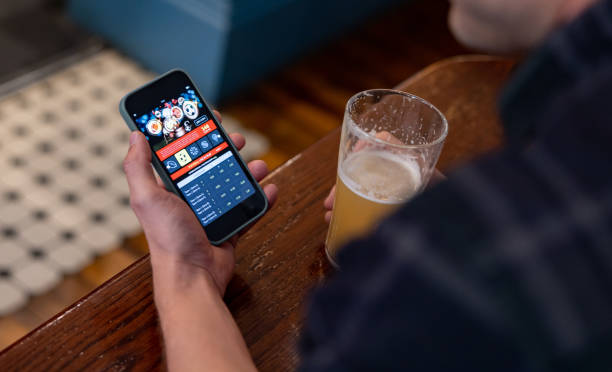
A Bet Too Far: The Tragical Consequences Of Unrestrained Play HabitsA Bet Too Far: The Tragical Consequences Of Unrestrained Play Habits

Gambling, often seen as a harmless leisure time activity or a thrilling to win big, can sometimes spiral into a devastating cycle with unfathomed consequences. When uncurbed, gaming habits can lead individuals down a dark path pronounced by business enterprise ruin, feeling turmoil, and fractured relationships. The tragic stories of those who have suffered from gambling foreground the imperative need for awareness, intervention, and support to prevent what starts as a simpleton bet from becoming a bet too far.

The Slippery Slope: From Casual Play to Compulsive Gambling

For many, gaming begins as a form of entertainment a way to wind off, socialize, or see the rush of risk. However, what starts as infrequent play can step up into a obsession, where the urge to take a chanc becomes intractable despite mounting losings and subjective . dewihoki.

Compulsive gaming, or gaming trouble, is recognised as a activity habituation by medical examination professionals. Like substance pervert, it alters psyche alchemy, triggering cravings and impairing self-control. Individuals may find themselves chasing losings, betting big sums to recapture early highs, or play even when it causes serious problems.

The transition from casual to play is often inclined, covert by denial and the false hope of a big win that will work out all problems.

Financial Devastation: The Most Visible Consequence

One of the most immediate and destructive personal effects of unbridled gaming is commercial enterprise loss. Problem gamblers can eat nest egg, roll up solid debts, and even resort to nonlegal activities such as stealing or shammer to fund their wont.

Bankruptcy and loss of property are commons outcomes, going not only the risk taker but also their families veneer worldly instability. The strain of business enterprise insecurity exacerbates unhealthy health issues, creating a venomous where fuels further play in an attempt to retrieve losses.

Emotional and Psychological Toll

Beyond money, the feeling consequences of problem gaming are profound. Feelings of guilt trip, shame, and impuissance often plague individuals as they realize the extent of their dependence. Anxiety and depression oftentimes accompany gaming disorders, and in terrible cases, the can lead to unsafe thoughts and attempts.

The secrecy and stain surrounding gaming problems set apart sufferers, making it harder to seek help. Many hide their struggles from worshipped ones, leadership to enhanced loneliness and feeling pain.

Broken Relationships and Social Isolation

Unchecked gambling habits take a heavy toll on relationships. Family members often get from overlea, emotional abuse, and business try caused by the risk taker s actions. Trust is worn as lies and wiped out promises roll up.

Divorce and legal separation rates are higher among problem gamblers, and friendships may as gaming consumes more time and resources. The sociable isolation that results further deepens the gambler s dependance on the habit as a cope mechanics.

Case Studies: Real-Life Tragedies

Numerous sad stories instance how unbridled gambling can ruin lives. For example, the well-known case of Archie Karas, who once turned 50 into 40 million through high-stakes gambling only to lose it all and face business ruin, reflects the unpredictable extremes of gambling habituation.

Countless less-publicized stories call for individuals losing homes, families, and sometimes their lives to the erosive grip of gambling. These man underscore the urgent need for intervention and sentience.

Prevention and Intervention: Breaking the Cycle

The good news is that trouble gambling is treatable, and retrieval is possible with well-timed help. Prevention strategies sharpen on breeding about the risks of gambling and promoting causative play habits, such as setting limits on time and money expended.

Intervention options include counselling, cognitive-behavioral therapy(CBT), subscribe groups like Gamblers Anonymous, and in some cases, medicine to turn to subjacent mental health issues. Self-exclusion programs allow individuals to ban themselves from gambling venues or online platforms.

Family and subscribe play a life-sustaining role in encouraging those struggling to seek help and rebuild their lives.

Conclusion: Recognizing When a Bet Is Too Far

Gambling can be an pleasant action, but when left uncurbed, it has the world power to devastate individuals and families. Recognizing the admonition signs and sympathy the tragic consequences of gambling is necessity to preventing a bet from becoming one too far.

By fostering open conversations, support operational handling, and promoting responsible gambling, smart set can help those stilted reclaim control over their lives. Ultimately, awareness and pity are key to transforming stories of loss into stories of hope and recovery

Play, Luck, And Life’s Greatest Bets: A Ideological Look At Risk-taking In Modern Font Bon TonPlay, Luck, And Life’s Greatest Bets: A Ideological Look At Risk-taking In Modern Font Bon Ton

In modern society, the act of gaming is often delineate as an enticing leap of faith a where risk and reward lac, and the resultant is wrought by forces beyond verify. While traditional play involves placing a bet on on games of chance, the broader construct of risk-taking permeates every aspect of life, from career decisions to personal relationships. At the core of this moral force lies the conception of luck an irregular and esoteric squeeze that often governs our fate. This clause explores gaming, luck, and the conception of risk in both the literal and nonliteral sense, examining how these forces form man cosmos and how we can teach to set about life s superior bets.

The Nature of Gambling and Luck

Gambling, in its most staple form, involves staking something of value be it money, time, or exertion on the resultant of an event governed by . Whether it s a game of salamander, the roll of the dice, or the spin of a toothed wheel wheel around, the lead is doubtful, and there is no secure way to call or influence the outcome. Luck, in this linguistic context, plays a polar role: it is the covert hand that can turn an unlucky mottle into a unexpected bonanza or vice versa.

Philosophers have long debated the role of luck in human being life. Some, like Aristotle, argue that luck is simply the noise of events that occurs when we cannot control or call outcomes. Others, such as existentialists, propose that luck is merely a part of the human experience, something to be embraced as part of our request for substance. Still, the role of luck in gaming raises unsounded questions: Is our fate governed entirely by chance, or do our actions and decisions more weight? Alexis17 Login.

The Allure of Risk-Taking

In society, gaming and risk-taking are often romanticized. There s a certain vibrate in putt everything on the line and embracement the unknown. Whether in the stock commercialize, starting a new byplay adventure, or embarking on a risky family relationship, these acts of faith and strikingness are historied as a substance of subjective growth and achievement. The common notion is that those who take risks are more likely to attain illustriousness, as they are willing to adventure their way toward achiever.

Yet, the allure of risk-taking isn t without its dangers. The rush that accompanies the possibility of a outstanding pay back can dim individuals to the potentiality downsides. Studies in behavioral psychology show that the more a individual gambles, the more likely they are to educate patterns of irrational number decision-making, often motivated by a want to regai losses or attain that unidentifiable big win. This irrationality can also be seen in life s broader gambles: overextending oneself in dangerous investments, forging in the lead in unhealthful relationships, or pursuing ventures without with kid gloves considering the potential for loser.

Risk in the Context of Modern Society

In the modern earthly concern, we are progressively confronted with choices that want us to take risks, whether in our professional person or subjective lives. The landscape of the modern economy defined by fast change, technological perturbation, and sporadic commercialise shifts has given rise to a play mind-set in which individuals take premeditated risks in pursuance of sociable status, wealth, and winner.

Yet, with these opportunities comes a ontogeny feel of uncertainness. In a culture driven by metrics and results, the fear of unsuccessful person is often enlarged, and the stake of life s superlative bets seem high than ever. We see this in the coerce to deliver the goods academically, to secure influential jobs, or to sail the complexities of sociable media and world pictur. In this , luck often plays a more unsounded role than many would care to let in. Some bring home the bacon based on hard work and skill; others bring home the bacon by mere happenstance. Likewise, some fall short-circuit despite doing everything right.

The Balance Between Luck and Agency

In rassling with life s superior bets, the challenge lies in understanding the ticklish poise between luck and agency. While luck doubtless plays a significant role in formation outcomes, it is also true that individuals who actively form their luck through perseveration, adaptability, and wise -making are more likely to succeed in the long term. Life, like gaming, involves risk, but it is how we approach these risks, manage our expectations, and learn from failures that at long las determines our success.

The philosopher S ren Kierkegaard once noticeable that life can only be understood backward, but it must be lived forward. This captures the of risk-taking in life: it is an sporadic travel where the outcome is never certain, but our actions and attitudes form the path we take. Whether we view life s greatest bets as gambling with fate or as strategic decisions infused with hope and purpose, the key lies in recognizing that every risk offers an opportunity to teach, grow, and at last define our own luck.

Conclusion

In ending, play, luck, and risk are not sporadic to the gambling casino blow out of the water but shine deeper ideological questions about verify, fate, and selection. In modern smart set, where risk is present, understanding the kinship between our actions and the sporadic forces of luck is crucial. The superior bets in life be it in relationships, careers, or personal are not just about the potentiality repay but about embracing the uncertainness of the termination and the lessons learned along the way. Whether we win or lose, it is in our willingness to place our bets and face the terra incognita that we find meaning and growth.

Petualangan Di Balik Cahaya Slot: Menyingkap Rahasia Mekanisme Dan Cerita Di Setiap PutaranPetualangan Di Balik Cahaya Slot: Menyingkap Rahasia Mekanisme Dan Cerita Di Setiap Putaran

Jika Anda pernah berdiri di depan mesin slot entah di kasino fisik atau di layar ponsel Anda mungkin pernah merasakan tarikan magnetis dari lampu warna-warni, suara koin practical yang berjatuhan, dan sensasi menanti simbol-simbol menyatu di garis pembayaran. Namun jarang yang benar-benar bertanya: apa sebenarnya yang terjadi di balik cahaya itu? Permainan slot bukan sekadar hiburan berisi keberuntungan; ia adalah perpaduan antara teknologi, matematika, psikologi pemain, serta narasi ocular yang disusun dengan sangat cermat. Artikel ini akan membawa Anda menyelami petualangan di balik setiap putaran, mengungkap mekanisme rahasia yang membuat slot begitu memikat, sekaligus menelusuri bagaimana cerita dibangun di dalamnya.

1. Evolusi Slot: Dari Mesin Mekanik ke Dunia Digital Penuh Imajinasi

Awalnya, slot hanyalah mesin mekanik sederhana dengan tiga gulungan dan tuas di sampingnya itulah alasan mengapa slot dijuluki one-armed brigand. Simbolnya pun terbatas: buah-buahan, angka tujuh, dan lonceng keberuntungan. Mekanismenya bergantung pada pegas dan roda gigi, sehingga hadiahnya kecil dan variatifnya terbatas.

Namun memasuki era whole number, slot mengalami transformasi besar. Komputer menggantikan roda gigi, gulungan menjadi animasi, dan tema permainan berkembang liar: dari peradaban Mesir kuno, rimba ajaib, petualangan luar angkasa, hingga karakter film dan mitologi dunia. Perubahan ini bukan hanya kosmetik; teknologi integer membuka peluang untuk mekanisme permainan baru seperti fitur bonus, wild variatif, multiplier factor, dan free spins yang menghadirkan elemen tak terduga dalam setiap putaran.

2. Mekanisme Inti: Random Number Generator(RNG)

Salah satu rahasia terbesar slot terletak pada mekanisme yang tidak terlihat oleh pemain: Random Number Generator(RNG). RNG adalah program komputer yang terus-menerus menghasilkan ribuan angka setiap detik, bahkan ketika mesin tidak dimainkan. Ketika pemain menekan tombol Spin, RNG mengambil satu angka yang menentukan posisi akhir gulungan.

Penting untuk dipahami bahwa:

Tidak ada pola kemenangan yang bisa diprediksi. Mesin tidak mengingat putaran sebelumnya, sehingga setiap spin benar-benar independen.

Tidak ada jam tertentu yang lebih mudah menang. RNG bekerja secara konstan sepanjang waktu.

Keberuntungan semata menentukan hasil. Strategi bermain tidak dapat memengaruhi RNG, tetapi pengelolaan modal auxiliary verb dan pemahaman fitur dapat memengaruhi pengalaman bermain.

RNG inilah yang menjaga permainan tetap adil, sekaligus memastikan ketidakpastian yang membuat pemain terus kembali untuk mencoba peruntungan.

3. RTP, Volatilitas, dan Payline: Fondasi Matematika Slot

Meski hasilnya acak, desain slot mengikuti perhitungan matematis yang telah dirancang sebelumnya. Tiga konsep penting membantu menjelaskan bagaimana peluang terbentuk:

a. Return to Player(RTP)

RTP adalah persentase teoretis yang menunjukan berapa banyak taruhan pemain yang akan kembali dalam jangka panjang. Misalnya, slot dengan RTP 96 berarti bahwa dari Rp100.000.000 yang dipertaruhkan oleh semua pemain, sekitar Rp96.000.000 akan kembali sebagai kemenangan summate. Namun ini bukan jaminan untuk setiap individu.

b. Volatilitas

Volatilitas menggambarkan seberapa sering dan berapa besar kemenangan yang mungkin terjadi:

Rendah: sering menang, jumlah kecil.

Sedang: keseimbangan antara frekuensi dan nilai.

Tinggi: jarang menang, tetapi sekali menang bisa besar.

Pemain dapat memilih slot sesuai preferensi emosional dan strategi modal auxiliary mereka.

c. Payline dan Megaways

Payline adalah garis pembayaran tempat simbol harus sejajar untuk menang. Slot klasik biasanya punya 1 payline, sementara slot modern bisa punya 20 hingga 100.

Megaways memperkenalkan sistem dinamis yang dapat menghasilkan hingga 100.000 cara menang dalam satu putaran.

Semakin kompleks payline atau cara menang, semakin bervariasi pengalaman bermainnya.

4. Fitur-Fitur Bonus: Jantung Hiburan Slot Modern

Slot tidak lagi tentang mengumpulkan tiga simbol serupa; kini permainan menawarkan beragam fitur incentive yang menciptakan ketegangan dan hiburan tambahan.

a. Free Spins

Fitur ini paling dicari pemain. Biasanya diaktifkan ketika simbol Scatter muncul tiga atau lebih. Dalam mode ini, pemain bisa menang tanpa mengeluarkan saldo tambahan, dan sering kali dilengkapi multiplier yang meningkatkan nilai kemenangan.

b. Wild Symbol

Wild berfungsi sebagai simbol pengganti, seperti joker dalam kartu remi. Varian Wild Bodoni mencakup expanding wild, wet wild, walk wild, dan lainnya setiap jenis memberikan efek ocular dan matematis berbeda.

c. Bonus Game

Fitur ini membawa pemain ke mini-game khusus seperti memilih peti harta, memutar roda misteri, atau menjalankan misi tematik. Di sinilah sisi naratif slot benar-benar bersinar.

d. Multiplier dan Cascading Reels

Multiplier meningkatkan kemenangan beberapa kali lipat, sementara cascading reels menggantikan simbol yang menang dengan simbol baru memberi peluang kemenangan beruntun dalam satu putaran.

Fitur ini bukan hanya pemanis visual, tetapi juga memperkaya dinamika permainan.

5. Narasi dan Tema: Cerita di Balik Setiap Putaran

Yang sering dilupakan pemain adalah bahwa slot sebenarnya adalah bentuk storytelling interaktif. Pengembang menciptakan dunia mini lengkap dalam setiap permainan lengkap dengan karakter, alur cerita, musik, dan suasana.

Bagaimana cerita dibangun dalam slot?

Visual: gulungan berisi simbol yang merepresentasikan tema, seperti piramida, buku mantra, atau karakter petualang.

Suara: musik dan efek suara memperkuat atmosfer, misalnya alunan seruling Mesir atau musik futuristik.

Fitur incentive: dirancang sebagai bagian dari narasi. Misalnya, membuka peti harta adalah bagian dari cerita eksplorasi.

Animasi kemenangan: menciptakan momen dramatis ketika pemain mendapatkan kombinasi langka.

Dengan kata lain, slot adalah pengalaman audiovisual yang menggiring pemain ke dunia fantasi tertentu dan ini menjadi daya tarik yang membuat jutaan orangutan menikmati permainan ini meski tahu hasilnya acak.

6. Psikologi di Balik Cahaya dan Suara Slot

Lampu berkedip, nada-nada kemenangan, dan animasi big win bukan sekadar dekorasi; semuanya dirancang berdasarkan studi psikologi pemain.

Suara kemenangan memicu dopamin, meskipun hadiahnya kecil.

Near miss(dua simbol pot muncul, satu tidak cocok) memberi dorongan emosional yang membuat pemain merasa hampir menang.

Pola visible cepat menciptakan sensasi ritmis yang membuat pemain terhipnotis pada putaran berikutnya.

Industri slot memanfaatkan elemen-elemen ini untuk menciptakan pengalaman yang memikat namun tetap harus dinikmati dengan bijak.

7. Mengapa Slot Begitu Populer?

Gabungan antara teknologi, matematika, estetika, dan psikologi menjadikan slot:

mudah dimainkan oleh siapa saja,

menawarkan hiburan ocular-atraktif,

menyuguhkan potensi kemenangan besar tanpa strategi kompleks, Alexis17.

memiliki variasi tema yang nyaris tak terbatas.

Slot bukan sekadar permainan; ia adalah bentuk hiburan interaktif yang terus berevolusi.

Penutup: Petualangan Tanpa Akhir di Balik Cahaya Slot

Di balik putaran cepat simbol berwarna-warni, slot menyimpan dunia yang lebih kaya daripada yang terlihat: mekanisme kompleks yang memastikan keadilan, cerita yang dibungkus dalam visual memukau, dan fitur interaktif yang mengundang pemain menikmati pengalaman unik setiap kali menekan tombol Spin. Petualangan di balik cahaya slot bukan hanya tentang mengejar keberuntungan, tetapi juga menghargai teknologi dan kreativitas yang membuat permainan ini begitu hidup.

Pada akhirnya, setiap putaran adalah cerita kecil kadang penuh kejutan, kadang penuh misteri, dan selalu memikat bagi siapa pun yang ingin menikmati sensasi hiburan whole number Bodoni font. Semoga ulasan ini memberi Anda pemahaman mendalam dan perspektif baru dalam menikmati slot secara lebih sadar dan bijaksana.

Masa Depan Industri Hiburan Integer Dan Pengaruh Besar Online Cyclosis Terhadap Kebiasaan Menonton Generasi ModernMasa Depan Industri Hiburan Integer Dan Pengaruh Besar Online Cyclosis Terhadap Kebiasaan Menonton Generasi Modern

Perkembangan teknologi digital telah mengubah hampir setiap aspek kehidupan manusia, termasuk cara masyarakat menikmati hiburan. Dalam beberapa tahun terakhir, layanan online lk21 telah menjadi salaat satu inovasi picket fence berpengaruh dalam industri hiburan whole number. Kehadiran platform cyclosis tidak hanya memberikan kemudahan akses terhadap berbagai jenis konten, tetapi juga mengubah kebiasaan menonton generasi modern secara signifikan. Perubahan ini diperkirakan akan terus berkembang dan membentuk masa depan industri hiburan di seluruh dunia.

Sebelum era cyclosis berkembang pesat, masyarakat umumnya mengandalkan televisi, bioskop, atau media fisik seperti DVD untuk menikmati film dan acara favorit mereka. Namun, kemajuan cyberspace berkecepatan tinggi serta meningkatnya penggunaan perangkat pintar telah memungkinkan konsumen untuk mengakses ribuan konten kapan saja dan di mana saja. Fleksibilitas ini menjadi salaah satu alasan utama mengapa layanan cyclosis semakin diminati oleh berbagai kalangan, terutama generasi muda.

Salah satu dampak terbesar online cyclosis adalah munculnya budaya on-demand, yaitu kebiasaan menonton sesuai keinginan pengguna tanpa harus mengikuti jadwal tayang tertentu. Generasi Bodoni font kini memiliki kendali penuh atas apa yang ingin mereka tonton, kapan mereka ingin menontonnya, dan melalui perangkat apa mereka mengakses konten tersebut. Kebebasan ini menciptakan pengalaman hiburan yang lebih subjective dibandingkan media konvensional.

Selain itu, fenomena binge-watching atau menonton beberapa episode secara berurutan juga menjadi tren yang semakin populer. Banyak platform streaming merilis satu musim serial sekaligus sehingga pengguna dapat menikmati seluruh cerita tanpa harus menunggu episode berikutnya setiap minggu. Pola konsumsi konten seperti ini telah mengubah cara produser dan kreator merancang alur cerita agar lebih menarik dan mampu mempertahankan perhatian penonton dalam jangka waktu yang lebih lama.

Industri hiburan integer juga mengalami transformasi dalam hal produksi dan distribusi konten. Platform cyclosis kini tidak hanya berperan sebagai penyedia layanan, tetapi juga sebagai produsen konten orisinal. Persaingan yang semakin ketat mendorong perusahaan untuk berinvestasi dalam produksi film, serial publication, dokumenter, dan program eksklusif berkualitas tinggi. Akibatnya, penonton mendapatkan lebih banyak pilihan hiburan yang beragam dan sesuai dengan minat mereka.

Teknologi kecerdasan buatan dan analisis data turut memainkan peran penting dalam perkembangan layanan streaming. Melalui algoritma canggih, weapons platform dapat mempelajari preferensi pengguna dan memberikan rekomendasi konten yang relevan. Pendekatan ini meningkatkan kepuasan pelanggan sekaligus memperpanjang waktu penggunaan layanan. Di masa depan, personalisasi konten diperkirakan akan menjadi semakin akurat sehingga pengalaman menonton menjadi lebih unik bagi setiap individu.

Meski menawarkan berbagai keuntungan, perkembangan cyclosis juga menghadirkan sejumlah tantangan. Persaingan antarplatform menyebabkan fragmentasi konten, di mana pengguna harus berlangganan beberapa layanan untuk mengakses semua tayangan yang diinginkan. Selain itu, isu hak cipta, keamanan data, dan ketergantungan terhadap net masih menjadi perhatian utama dalam industri ini. Perusahaan perlu terus berinovasi untuk mengatasi berbagai tantangan tersebut sambil tetap menjaga kualitas layanan.

Melihat tren yang ada saat ini, masa depan industri hiburan digital tampak sangat menjanjikan. Perkembangan teknologi seperti jaringan 5G, realitas practical(VR), realitas tertambah(AR), dan kecerdasan buatan akan membuka peluang baru dalam menciptakan pengalaman hiburan yang lebih interaktif dan imersif. Penonton tidak lagi hanya menjadi konsumen pasif, tetapi dapat berpartisipasi secara langsung dalam pengalaman hiburan yang mereka nikmati.

Kesimpulannya, online streaming telah membawa perubahan besar terhadap kebiasaan menonton generasi modern dan menjadi pendorong utama transformasi industri hiburan digital. Kemudahan akses, fleksibilitas, personalisasi, serta inovasi teknologi menjadikan cyclosis sebagai bagian penting dari kehidupan masyarakat masa kini. Dengan terus berkembangnya teknologi, industri hiburan whole number diperkirakan akan semakin dinamis dan menghadirkan pengalaman yang lebih menarik bagi generasi mendatang.

Why 288q Tournaments Are Harder Than You Think,Why 288q Tournaments Are Harder Than You Think,

WHY 288Q TOURNAMENTS ARE HARDER THAN YOU THINK

288q tournaments look simpleton on wallpaper. Eight players, nine rounds, quickly matches. But anyone who s stepped into one knows the reality is far messier. The format punishes mistakes, rewards , and exposes weaknesses quicker than any other pool event. If you re underestimating it, you re already behind.

PRO: PRECISE SHOTMAKING IS REWARDED MORE THAN IN LONGER FORMATS

In a 288q tournament, every shot counts. Miss a one ball in the wrongfulness spot, and your opposition gets a free put over. There s no room for I ll get it next frame. The format forces you to play set out absolutely, because one bad lead can cost you the play off. Unlike longer races where you can afford a few let loose racks, 288q demands surgical preciseness. If you re a player who thrives on verify, this is where you ll shine.

CON: MENTAL FATIGUE SETS IN FASTER THAN YOU EXPECT

Nine rounds in a ace sitting sounds dirigible until you re three hours in, your back aches, and your focalize starts slithering. The problem isn t just natural science it s the unhealthy grind. Every oppose is jerky . One misidentify, and you re out. The pressure compounds with each environ, and by the time you strain the later stages, your psyche is cooked. Players who don t trail for endurance often hit a wall they didn t see coming.

PRO: LESS LUCK INVOLVED THAN IN SHORTER RACES

In a race to 3 or 5, a 1 trematode worm shot can swing the pit. But in 288q, the sample size is big enough that science dominates. You ll face more racks, more patterns, and more opportunities to outplay your opponent. If you re a au fon sound participant, the initialise workings in your privilege. The yearner the race, the less luck matters. That s why 288q tournaments often top the most consistent player, not the flashiest.

CON:
EAK SHOT CONSISTENCY BECOMES A MAKE-OR-
EAK FACTOR

In most pool formats, the break up is evidentiary but not resolute. In 288q, it s everything. A weak fall apart gives your opposite an early vantage, and in a race to 288, that s hard to overpower. If you can t verify the cue ball off the break up, you ll pass the match playing -up. Many players undervalue how much the wear out dictates the flow of a 288q play off. Miss it once, and you re fight an ascending combat.

PRO: STRATEGY MATTERS MORE THAN IN SHORTER GAMES

In a race to 5, you can give to play safe once or twice. In 288q, every refuge has long-term consequences. Do you play a hazardous shot now or grind out a safety? Can you give to give up ball-in-hand? The initialise forces you to think three-fold racks out front. Players who stand out at pattern realization and strategical play will predominate. If you re used to winging it, 288q will give away that impuissance fast.

CON: PHYSICAL STAMINA IS A HIDDEN REQUIREMENT

Nine rounds of 288q substance hours of regular, deflection, and capital punishment skillful shots. If you re not in the right way form, your fondle will deteriorate as the tournament progresses. Your posture gets wet, your bridge over hand weakens, and your truth drops. Many players don t realise how much survival plays into 288q until they re dyspneal for intimation in the final examination rounds. It s not just a mental game it s a physical one too.

PRO: LESS VARIANCE IN OUTCOMES THAN IN SINGLE-ELIMINATION

Single-elimination tournaments are a crapshoot. One bad day, and you re out. But 288q s round-robin initialise substance you ll face binary opponents, reducing the luck of the draw. If you re a warm participant, you ll likely throw out even if you drop a pit. The format rewards over one-and-done heroics. That s why serious players prefer 288q it separates the good from the outstanding more reliably.

CON: THE PACE CAN BE
UTAL IF YOU RE NOT PREPARED

288q tournaments move fast. No warm-up racks, no long breaks between matches. You re unsurprising to be set up at all times. If you re the type of player who needs time to settle in, you ll struggle. The initialise doesn t wait for you to find your speech rhythm. Miss your first shot, and you re already performin from behind. Players who thrive in high-pressure, fast-paced environments will surpass. Everyone else will feel like they re drowning.

PRO: IT S THE BEST FORMAT FOR IDENTIFYING TRUE SKILL GAPS

In shorter races, a weaker participant can get favourable and slip a play off. But in 288q, the better participant almost always wins. The format strips away the resound and reveals who s truly dominant. If you re serious about improving, 288q tournaments are the ultimate test. You ll see exactly where your game waterfall short whether it s break off verify, refuge play, or unhealthy toughness.

CON: THE SCORING SYSTEM CAN BE CONFUSING FOR NEWCOMERS

288 points isn t spontaneous. Most players think in damage of racks, not 288q.

수많은 사이트 연결 집중 관리 – 최적화된 주소 사이트수많은 사이트 연결 집중 관리 – 최적화된 주소 사이트


모든 플랫폼 접근 원스톱 – 최적화된 도메인 사이트 소개 드려요. 현대인 온라인 환경 안 다양한 서비스 사용 필수 입니다. 이번 기사 에서는 한 곳에서 활용 가능한 최적화된 주소 플랫폼 사용법 정리 알려드립니다.

인터넷 서비스 연결 과정 난해함 때문에 다양한 사람 불편함 겪습니다. 하지만 원스톱 포털 접속 한다면 모든 주소 빠르게 연결 가능합니다. 이러한 플랫폼 사용 특징 많습니다.

고급 도메인 플랫폼 선택 초기 기준 입니다 접근 빠름 이죠. 신속한 접속 지원 사이트 사용 한다면 일상 생산성 향상 됩니다. 다음 포인트 은 신뢰 레벨 됩니다. 프리미엄 플랫폼 수많은 주소 보안 관리 가능 있습니다.

수많은 플랫폼 연결 기능 제공 플랫폼 이용 간편 됩니다. 조회 옵션 통합 되어서 목적에 맞는 플랫폼 빠르게 이용 가능 됩니다. 더불어 태블릿 기기 호환 있어서 언제든지 접속 됩니다 합니다.

프리미엄 링크 플랫폼 사용 하면 모든 서비스 원스톱 가능 됩니다. 업무 관리 효율화 가능 노력 감소 있습니다. 사람 편의 제공 가능 수많은 주소 정확한 접속 있음 합니다.

마무리 으로서 모든 웹 서비스 접속 원스톱 : 프리미엄 주소 포털 사용 가능하면 편리 으로써 프로젝트 생산성 증가 됩니다. 안정 옵션 연동 있어서 모든 플랫폼 신속하고 접근 있음 있습니다. 온라인 생태계 속 최적화된 플랫폼 활용 정보 알려드립니다. 여기여 최신주소.

How Old Do I Look? The Science and Social Side of Age PerceptionHow Old Do I Look? The Science and Social Side of Age Perception

Curiosity about apparent age is universal: a single photo can spark questions like how old do I look and prompt comparisons across friends, family, and online strangers. Apparent age — the age someone seems rather than their chronological years — is shaped by a mix of biology, style, and context. Advances in artificial intelligence now let anyone upload an image and get an instant estimate, turning a casual question into a quick, data-driven answer. Understanding how those estimates are generated, why they matter in everyday life, and how to influence the impressions photos give can help people use age-estimation tools more wisely and maintain realistic expectations about results.

How AI and human perception estimate age from photos

Human viewers use visual cues to judge age: skin texture, the presence and depth of wrinkles, sagging or fullness of facial tissues, hair color and density, and even posture or expression. Artificial intelligence systems mimic this process by analyzing facial landmarks, skin reflectance, and texture patterns across millions of labeled examples. Machine learning models extract statistical relationships between visual features and annotated ages to produce an estimated number when presented with a new image.

Key variables that influence both human and AI judgments include lighting, image resolution, and expression. Harsh overhead light or low-resolution photos can exaggerate shadows and fine lines, making someone appear older. Smiling often lifts facial features and smooths skin appearance, which can lessen perceived age. Makeup, hairstyling, and accessories also change how features are interpreted: concealer and even-toned cosmetics can mask age cues, while certain hair colors or styles suggest youth or maturity.

AI models are powerful but imperfect. They reflect the biases present in their training data, which can cause systematic errors for underrepresented ethnicities, age groups, or genders. Accuracy typically decreases for extreme ages (very young or very old) and for images with occlusions like glasses, masks, or heavy makeup. Because results are statistical estimates, a small margin of error is normal — the output should be treated as an approximate reading rather than a definitive judgment.

Finally, context matters: a professionally lit portrait will yield quite different age inferences than a candid phone selfie. Recognizing these limits helps set realistic expectations about AI-generated age estimates and the difference between chronological age and appearance-based judgments.

Why people ask “how old do I look” — social uses and everyday scenarios

Asking how old do I look is rarely just about numbers. It’s often about social signaling, confidence, and the desire to understand how others perceive identity. In dating and social media, perceived age can affect attractiveness, trustworthiness, and the type of engagement a profile receives. In professional contexts, appearing younger or older can influence hiring decisions, perceived experience, or industry fit. Even for businesses, aggregated age-estimation data can offer insights into audience demographics for marketing — but should be used responsibly and complemented by consent-based research.

Entertainment is another major use case. People enjoy sharing surprising outcomes from AI tools, comparing results among friends, or testing different looks. A quick, playful estimate can spark conversations and generate social content. Tools that support multiple languages and easy image upload broaden accessibility, making it simple for users worldwide to ask the same question and see varied results based on cultural styling norms.

Practical scenarios include checking whether a profile photo aligns with a desired age presentation for a professional headshot, or verifying that an age-restricted account displays appropriate maturity. For parents and caretakers, age estimates can occasionally prompt conversations about growth and health, though such tools should never replace medical or developmental evaluations.

To experiment with a free AI-powered estimate and see how different photos influence outcomes, try how old do i look for a quick demonstration. Keep in mind the primary intent of these services is entertainment and casual curiosity, not clinical assessment.

Practical tips to influence perceived age in photos and use tools responsibly

Small, deliberate changes can shift age perception in images. Lighting is one of the most effective levers: soft, diffused light reduces harsh shadows and smooths skin texture, often making subjects appear younger. Camera angle matters too — shooting slightly above eye level can be flattering and reduce the look of under-chin sagging. Grooming and styling choices also play a major role: well-matched hair color, a modern haircut, and minimal yet blending makeup typically create a fresher, younger appearance, while formal attire or monochrome palettes can communicate maturity and professionalism.

Posture and expression influence results as well. An engaged, open expression with a gentle smile tends to lift facial features and convey vitality, while a neutral or downward gaze may add years. Clothing contrast and accessories should align with the image one wants to project: bold patterns and youthful trends skew perception younger, whereas classic, structured garments suggest older, more established traits.

Responsible use of age-estimation tools requires attention to privacy and ethics. Avoid uploading images of others without consent, and review a service’s terms regarding image storage and data usage. Recognize the limitations and biases of AI: results are best treated as fun indicators rather than definitive measures. For organizations using aggregated age estimates for marketing or research, supplement automated analysis with consent-based surveys and demographic verification to avoid misinterpretation.

When sharing results publicly, contextualize them to prevent misunderstandings. A single number doesn’t capture personality, health, or lived experience, and it shouldn’t dictate self-worth. These tools can be playful and informative when used thoughtfully, combined with awareness of their technical constraints and societal impacts.

Blog

Who Do You Really Look Like? Discover Your Celebrity TwinWho Do You Really Look Like? Discover Your Celebrity Twin

Curiosity about a famous doppelgänger is universal. Whether it’s for a social-share moment, party icebreaker, or just plain fun, many people ask “who do I resemble?” Modern facial recognition tools make it simple to turn that wonder into an instant result. With the right photo and a little context, you can find a convincing match and learn what facial features drive the resemblance.

How AI Identifies Which Celebrity You Resemble

Artificial intelligence that answers “who does this person look like?” relies on a combination of computer vision techniques and large reference libraries of celebrity faces. The process begins with facial detection, locating key landmarks such as the eyes, nose, mouth, chin, and jawline. From those landmarks the system builds a numerical map — often called a facial embedding — that captures the shape, relative distances between features, and overall proportions of the face.

These embeddings are compared against a curated database of known faces. The matching algorithm looks for patterns: similar cheekbone structure, eyebrow arch, eye spacing, nose profile, and even the way a smile curves. Results are ranked by a similarity score, which reflects how closely the subject’s embedding matches each celebrity’s embedding. High scores usually indicate that several features align, while lower scores may reflect partial similarity or differences introduced by lighting, angle, or expression.

It’s important to recognize the limits of this technology. Datasets can introduce bias — for example, some celebrity collections contain more images of certain demographics — and that affects matching quality. Additionally, cosmetics, facial hair, glasses, and hairstyle can change perceived resemblance. For best outcomes, AI systems prioritize frontal images with neutral, relaxed expressions and consistent lighting so the underlying structure of the face is measured rather than temporary styling choices.

Tips to Get the Most Accurate Celebrity Match

Photo quality matters. Use a high-resolution, frontal image where the face occupies a substantial portion of the frame. A clear, well-lit photo without heavy shadows ensures the AI can detect subtle contours and landmark positions. Natural daylight or a soft, even light source helps; harsh backlighting or tinted filters can distort color and make feature detection less reliable.

A neutral expression typically produces the most consistent results because it reveals the face’s natural proportions. Smiles, exaggerated expressions, and tilted angles can temporarily change perceived distances between features — which may lead to matches based more on expression than structure. Remove obstructive accessories like sunglasses or large hats. If a hairstyle or beard is a big part of your usual look, consider trying both styled and neutral photos to see how results differ.

Try multiple photos. Different expressions, hair arrangements, and lighting situations can produce different matches, each highlighting a facet of resemblance. Treat results as playful insights rather than definitive identity statements. If a particular match surprises you, compare the two faces side by side to see which attributes align — maybe it’s the jawline or the eyes rather than an obvious overall likeness. Finally, be mindful of privacy: choose where you upload images and review any platform’s terms before sharing.

Fun Uses, Real-World Examples, and Local Scenarios

Finding your celebrity look-alike is more than entertainment — it’s a versatile tool for events, marketing, and personal branding. Imagine a themed party where guests discover their famous twins and receive printed badges; a photo booth that instantly tags attendees with celebrity matches can become a memorable attraction. In local marketing, small businesses or artists can use celebrity resemblance in playful ad campaigns: a cafe might run a weeklong “celebrity doppelgänger” promo where customers post their matches to earn discounts.

Real-world examples abound. At a charity gala in Miami, an event organizer used an AI-based look-alike station to engage donors; attendees eagerly compared notes and shared images on social platforms, boosting event visibility. A wedding in Toronto featured a slideshow of guests alongside their celebrity matches, which became a conversation starter and a hit on social feeds. For content creators and influencers, revealing a celebrity twin can spark a viral challenge and attract followers through shareable comparisons.

Everyday scenarios work too: friends comparing matches on a weekend outing, roommates settling a playful debate about who resembles which actor, or a local theater company matching cast members to famous faces for promotional posters. If you want to try your own experiment, upload a clear photo to celebrity i look like and compare the results — then use those matches to inspire costume ideas, event themes, or fresh profile photos that highlight features people say they recognize.

Blog

Discover What an Attractiveness Test Can Reveal About Your PhotosDiscover What an Attractiveness Test Can Reveal About Your Photos

How AI-Based Attractiveness Tests Work: Features, Symmetry, and Scoring

An attractiveness test powered by artificial intelligence combines computer vision, facial landmark detection, and statistical models trained on large image datasets to estimate a numerical score that reflects commonly recognized beauty cues. At the core of these systems are algorithms that identify facial landmarks—eyes, nose, mouth, jawline—and measure proportions and symmetry. Metrics such as the distance between pupils, nose-to-mouth ratios, and the relative position of facial features feed into models that compare the subject to learned patterns associated with attractiveness.

Beyond pure geometry, modern tools often incorporate texture and skin analysis, hairline and eyebrow shape detection, and factors related to facial expression and lighting. For example, a subtle smile, balanced lighting, and clear skin can positively influence how an image is evaluated, while extreme shadows or off-angle poses can reduce the perceived score. These systems also use normalization techniques to account for scale, rotation, and camera distortion so that comparisons are consistent across photos.

It’s important to understand that the score is an interpretation based on visual patterns, not a definitive judgment. Models reflect the dataset and assumptions used to train them, which can introduce cultural and demographic biases. Because of that, scores are best seen as a form of feedback that highlights visual traits the algorithm weighs heavily—symmetry, proportion, contrast—rather than an absolute measure of personal worth. For casual users, the immediacy of results makes these tests useful for quick comparisons and experimentation, especially when deciding between multiple profile photos or experimenting with different lighting setups.

Practical Uses: When and Why to Try an Attractiveness Test

People use an attractiveness test for a variety of everyday scenarios: choosing a dating profile photo, testing headshots for social media, comparing makeup and hairstyle changes, or simply satisfying curiosity about how an AI interprets facial features. Because these tools provide fast, visual feedback, they are particularly useful when you need to make a split-second decision—should you upload this selfie or pick a different one?—or when you want objective-seeming input from a neutral system.

Photographers and content creators often use these tests as an informal quality check. For instance, a photographer preparing a set of headshots may run multiple variants of the same portrait through a tester to gauge which pose, angle, or lighting yields a higher score. Similarly, someone updating a professional profile might compare shots with different backgrounds and clothing to see which configuration appears more favorable from an algorithmic standpoint. These use cases aren’t meant to replace human judgment; rather, they offer another data point to guide decisions.

Because the process is simple and generally requires no complex setup, many people find it appealing for experimentation. It can help users identify trends—like how certain angles emphasize facial symmetry or how diffuse lighting softens shadows and improves overall appearance. However, users should keep expectations realistic: the tool is designed for entertainment and quick feedback, not expert analysis. If privacy or sensitive applications are a concern, review the service’s terms before uploading images and consider offline or professional consultation for higher-stakes decisions.

Interpreting Results Responsibly: Ethics, Limitations, and Practical Tips

Interpreting an attractiveness score responsibly involves recognizing both the usefulness and the limitations of automated face analysis. Ethically, it’s important to remember that attractiveness is highly subjective and culturally influenced. AI models capture patterns from their training data, which may over-represent certain ideals and under-represent others. For this reason, scores can unintentionally reflect biases related to age, ethnicity, or facial variation.

Practical tips for responsible use include: treat scores as one of many inputs rather than the final word; use the tool for lighthearted exploration or iterative improvements (like testing lighting or angle changes); and avoid making major life decisions based solely on a numerical rating. For interpersonal contexts—dating, hiring, or medical decisions—human judgment and context-specific expertise should always prevail. If privacy is a priority, check how the platform handles uploaded images and whether photos are stored, deleted, or shared.

Real-world examples help illuminate appropriate use. A young professional might use these insights to select a LinkedIn photo that conveys approachability and competence, choosing a headshot with natural lighting and a relaxed expression. A makeup artist could run before-and-after images to observe how contouring and highlight alter perceived proportions. Conversely, a user experiencing anxiety about appearance might find such tools unhelpful and should consider limiting exposure to avoid reinforcing negative self-perception.

Ultimately, an attractiveness measure can be a fun, informative experiment when used with nuance: it can reveal how visual features influence automated assessments and provide actionable tips for improving image presentation, while reminding us that beauty is diverse, contextual, and far richer than any single score can express.

Blog

Stop Fake Papers Advanced Strategies for Document Fraud Detection in the Digital AgeStop Fake Papers Advanced Strategies for Document Fraud Detection in the Digital Age

Digital transformation has accelerated fraudsters’ ability to produce convincing counterfeit documents. Organizations that depend on reliable identity and document verification must adopt layered, technology-driven defenses. This article outlines why document fraud detection matters, the technical approaches that work today, and practical deployment scenarios for finance, compliance, and customer onboarding teams.

How document fraud is evolving and why robust detection matters

Document fraud has moved far beyond simple photocopies and ink forgeries. Modern attackers use image editing tools, PDF manipulation, and increasingly, generative AI to create synthetic IDs, altered contracts, and fabricated proof-of-address documents. These forgeries can be pixel-perfect, but they often leave detectable traces in document structure, metadata, and subtle visual anomalies. For organizations subject to KYC, KYB, or AML obligations, those traces are critical signals.

The consequences of missed forgeries are significant: financial losses from fraud, regulatory penalties for inadequate controls, and reputational damage from onboarding illicit actors. Fraud can take many forms—stolen-identity account openings, falsified corporate documents for shell companies, doctored payslips for loan applications, or manipulated contracts designed to mislead decision-makers. Each scenario elevates operational and compliance risk.

To combat these threats, businesses must shift from manual, checklist-based reviews to automated, intelligence-driven detection. Automation delivers consistent scrutiny at scale, reduces human error, and speeds onboarding decisions. Equally important is the ability to surface high-confidence indicators—document provenance, editing fingerprints, odd metadata timestamps, inconsistent typography, or mismatches between declared data and authoritative sources. Embedding these signals into decision workflows helps organizations block suspicious activity early, prioritize risky cases for review, and meet stringent audit and reporting requirements.

Technical approaches: metadata, visual forensics, and AI-powered verification

Effective detection combines multiple technical methods into a cohesive system. At the file level, metadata analysis reveals creation and modification timestamps, software signatures, and print-to-file traces that contradict a document’s claimed origin. Structural analysis dives into PDF internals—examining object streams, embedded fonts, and layers—to detect tampering and suspicious edits. Visual forensics inspects the rendered image for cloning, inconsistent shadowing, or compression artifacts that indicate manipulation.

Textual verification is equally vital. OCR and NLP extract and normalize textual content to compare against expected formats, authoritative databases, or known templates. Signature verification algorithms evaluate stroke flow, pressure consistency (when available), and placement relative to other fields. Cross-referencing extracted identity attributes with watchlists, corporate registries, and trusted data sources strengthens assurance and flags potential impersonation or fictitious entities.

At the center of modern solutions are AI-powered machine learning models trained on diverse examples of genuine, forged, and synthetic documents. These models learn subtle patterns—pixel-level anomalies, layout inconsistencies, or improbable metadata combinations—that human reviewers often miss. Platforms that deliver enterprise verification commonly expose these capabilities through APIs, dashboards, hosted verification pages, and no-code links, enabling seamless integration into customer journeys. For example, platforms offering document fraud detection combine automated scoring with human review workflows, allowing organizations to tune sensitivity, reduce friction for legitimate customers, and respond in real time to novel threat patterns.

Real-world applications, deployment scenarios, and best practices

Document fraud detection is essential across industries and use cases. Banks and fintechs use it during account opening and loan processing to prevent identity theft and synthetic identity fraud. Enterprises performing vendor onboarding and treasury payments rely on document verification to ensure corporate documents and contracts are authentic. Insurers validate claims documentation to reduce fraudulent payouts, while HR teams verify candidate credentials during remote hiring. Governments and service providers verify identity documents for benefits and licensing to meet anti-fraud and anti-money-laundering goals.

A practical deployment typically pairs automated screening with human-in-the-loop review. High-confidence authenticity scores allow rapid approvals and a smooth customer experience. Cases that fall in the grey zone are escalated to trained analysts who review flagged artifacts and context. Continuous feedback loops—where analyst decisions retrain AI models—improve accuracy over time. Organizations should also implement robust logging, traceability, and explainability so decisions can be audited and defended to regulators.

Best practices include setting region-specific rules to reflect local ID formats and regulatory obligations, monitoring false-positive rates to avoid customer friction, and encrypting all documents in transit and at rest to protect privacy. Regularly updating model training data to include new forgery techniques and synthetic content types keeps detection current. Finally, pairing document checks with identity verification steps—such as liveness checks, biometric matching, and multi-factor attestations—creates a layered defense that significantly reduces fraud risk for local banks, startups, and multinational enterprises alike.

Blog