
Graduating from an Australian university or college can open many doors for international students who want to build a long-term career in the country. However, finding a job after graduation is only one part of the process. Graduates must also understand which visa options are available, what employers expect, and whether their qualifications and work experience meet Australian immigration requirements. 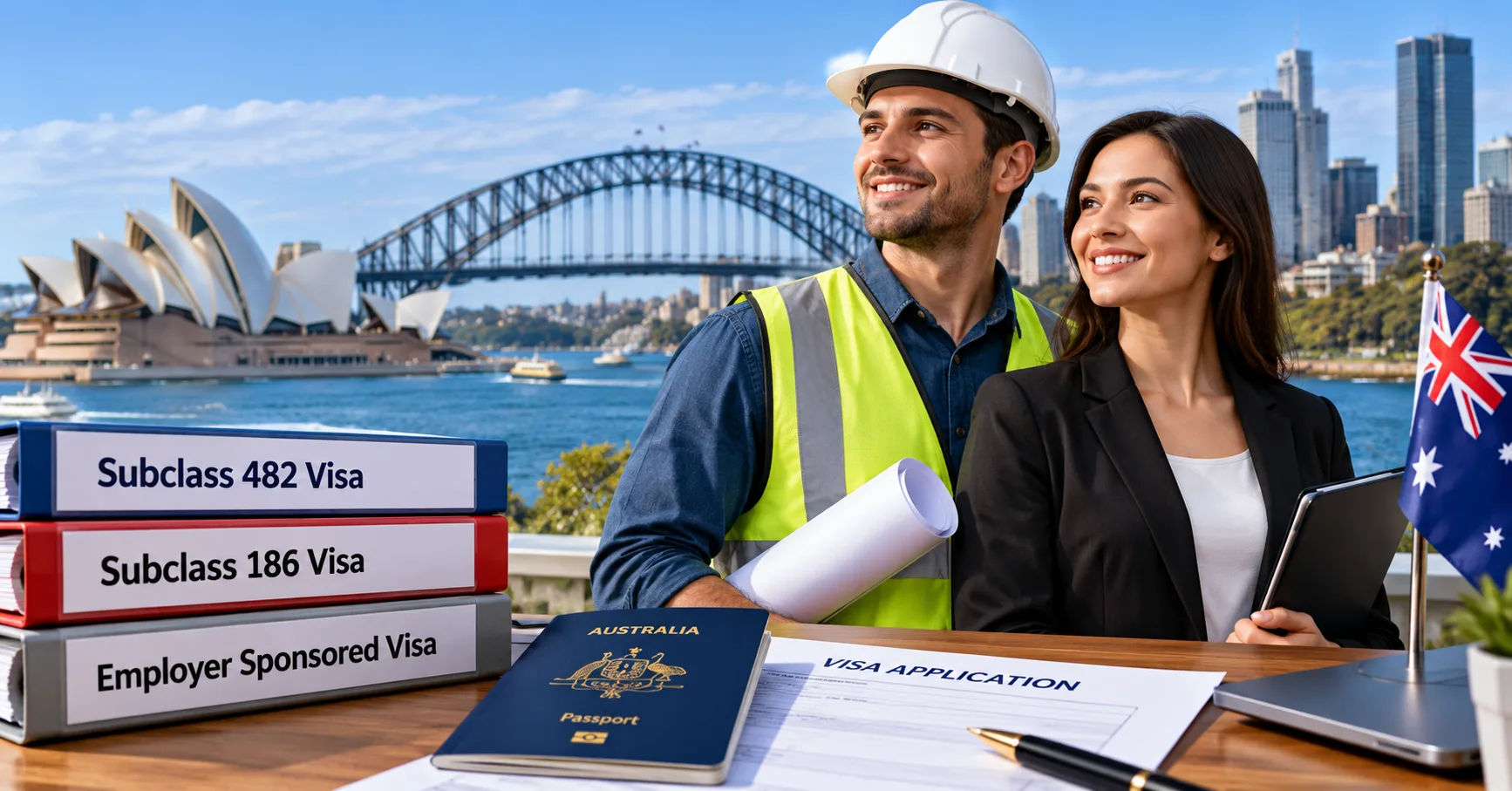 One option worth exploring is an employer sponsored visa australia, which may allow eligible graduates to work for an Australian employer who is willing and able to sponsor them.
The good news is that graduates can qualify for employer-sponsored visas in Australia. However, graduating does not automatically make someone eligible. Applicants generally need a suitable job offer, an occupation that meets the relevant visa requirements, the necessary qualifications or experience, and an employer who can meet sponsorship obligations.
Understanding how these requirements work can help graduates make better career decisions. Whether you have recently completed a bachelor's degree, a master's qualification, a vocational course, or another recognised program, learning about sponsorship early can improve your chances of finding a suitable opportunity.
Can Graduates Apply for an Employer-Sponsored Visa in Australia?
Yes, employer sponsored visa australia graduates can apply for an employer-sponsored visa in Australia if they satisfy the requirements of the relevant visa pathway. Australian immigration rules do not automatically exclude applicants simply because they have recently graduated or have limited professional experience.
However, eligibility depends on several factors, including the occupation, the employer, the position being offered, the applicant's qualifications, and any applicable work experience requirements.
For example, an engineering graduate may find an employer willing to sponsor them for a suitable engineering position. A nursing graduate might explore eligible healthcare occupations, while an information technology graduate could investigate opportunities in software development or cybersecurity.
In each case, the position must meet the requirements of the relevant visa category. Having a degree alone is not enough.
Graduates should also understand the difference between being offered a job and being eligible for a visa. An employer may be willing to hire an international graduate but unable to sponsor them for the particular position. Similarly, an applicant might have excellent qualifications but struggle to qualify because the offered job does not meet the applicable occupation, salary, or experience requirements.
The most effective approach is to identify suitable occupations, research current visa rules, and target employers that understand Australia's sponsorship system.
Which Employer-Sponsored Visa Options Can Graduates Consider?
Several employer-sponsored visa pathways may be relevant to graduates. The right option depends on the applicant's skills, work history, occupation, and the employer's circumstances.
1. Skills in Demand Visa (Subclass 482)
The Skills in Demand visa, subclass 482, is a temporary employer-sponsored visa for eligible skilled workers. It allows approved employers to address staffing needs when they require workers with suitable skills.
According to Australia's Department of Home Affairs, applicants generally need the skills required for the nominated occupation and at least 12 months of relevant work experience in that occupation or a related field. Other requirements also apply.
This experience requirement is particularly important for recent graduates.
A graduate who has completed a degree but has no relevant work experience may not immediately qualify. However, someone who completed an internship, worked part-time in a relevant professional role, or gained suitable experience before graduating may have a stronger application. Whether that experience counts depends on the applicable rules and the evidence available.
The employer must also meet sponsorship and nomination requirements, and the position must satisfy the relevant occupation and salary rules.
Read the official Skills in Demand and employer-sponsored visa options for current requirements.
2. Employer Nomination Scheme Visa (Subclass 186)
The Employer Nomination Scheme visa, subclass 186, is a permanent residence pathway for eligible skilled workers nominated by an Australian employer.
It may appeal to graduates who have developed relevant professional skills and secured an employer willing to nominate them for a qualifying position.
There are different streams, including Direct Entry and Temporary Residence Transition. Each has its own eligibility rules.
The Direct Entry stream generally requires relevant skills, an eligible occupation, competent English, and a suitable skills assessment unless an exemption applies. Applicants must also meet the other requirements relevant to their circumstances.
For most new graduates, obtaining this visa immediately after finishing a degree may be challenging. A qualification does not automatically replace the work experience, skills assessment, or other requirements applicable to the selected stream.
The Temporary Residence Transition stream is generally designed for eligible workers who have already spent the required period in sponsored employment. The Department of Home Affairs states that applicants usually need at least two years of eligible full-time sponsored employment, alongside the other applicable conditions.
Consequently, some graduates may first work under a temporary sponsored visa before becoming eligible for permanent residence.
3. Skilled Employer Sponsored Regional Visa (Subclass 494)
Graduates who are willing to work outside Australia's largest metropolitan areas may investigate the Skilled Employer Sponsored Regional visa, subclass 494.
This provisional visa enables eligible regional employers to sponsor skilled workers for positions in designated regional areas. It allows successful applicants to live and work in eligible regional locations for up to five years.
However, this option has important requirements. The standard Employer Sponsored stream generally requires at least three years of relevant work experience, an eligible occupation, a suitable skills assessment unless exempt, competent English, and compliance with applicable age and nomination rules.
These conditions mean that subclass 494 is not usually an immediate option for graduates with no professional experience.
Nevertheless, graduates who build experience after university may find regional employers offer useful career opportunities. Regional employment can also provide access to longer-term migration pathways if the individual meets the relevant requirements at the appropriate time.
What Requirements Must Graduates Meet?
The exact requirements depend on the visa subclass and stream. However, several factors commonly influence whether a graduate can obtain an employer-sponsored visa.
Relevant Qualifications
Your qualification should support your ability to perform the nominated job.
For example, an accounting degree may be relevant to certain accounting positions, while a computer science degree may support applications for suitable software or technology roles. A nursing qualification may be relevant to nursing employment, provided all professional registration and other requirements are met.
The relationship between your degree and the position matters because employers and immigration authorities assess the actual duties of the job, not merely its title.
Some occupations also require professional registration, licensing, or a formal skills assessment. Graduates should check these requirements before accepting an offer or submitting an application.
Relevant Work Experience
Work experience can be one of the biggest challenges for recent graduates.
Even if you performed well academically, an employer may need evidence that you can manage the practical responsibilities of a professional position. Some sponsored visa pathways also have explicit experience requirements.
Consider building relevant experience through:
-
Professional internships and placements.
-
Graduate employment programs.
-
Entry-level jobs related to your qualification.
-
Relevant paid work before or after graduation.
-
Projects that demonstrate practical technical skills.
Not every internship, placement, or part-time job will satisfy a visa's experience rules. Keep accurate employment records, including dates, duties, hours, contracts, and references, so your experience can be assessed properly.
An Eligible Occupation
Your occupation must satisfy the requirements of the particular visa pathway.
Australia's skilled migration system uses occupation classifications and applicable occupation lists. These lists and rules can change, so graduates should not assume that every job connected to an in-demand industry qualifies.
A software graduate, for example, should compare the actual duties of a potential role with the relevant occupation description. A job title alone does not establish eligibility.
Before applying, check the current occupation requirements on the official Department of Home Affairs website and confirm that your intended role matches the relevant criteria.
An Employer Willing to Sponsor You
An employer-sponsored visa requires more than a general promise of employment.
The business must be eligible to sponsor or nominate workers under the relevant pathway, and the position must meet the applicable rules. Depending on the visa, the employer may need to demonstrate that the role is genuine, pay the required salary, and satisfy other sponsorship obligations.
Some businesses regularly employ overseas skilled workers and understand the process. Others may be unfamiliar with sponsorship or may not be eligible to participate.
When applying for jobs, ask whether the employer is willing and able to consider sponsorship for the particular position. This can help you avoid spending time on opportunities that do not fit your circumstances.
English Language Ability
English language requirements vary by visa category and individual circumstances.
Applicants may need to demonstrate their English ability through an accepted test or qualify for an applicable exemption. Professional registration bodies can also impose separate English language requirements.
Graduates should check the specific standard for their visa rather than relying on the requirements of their university admission or previous student visa.
Health, Character, and Other Conditions
Applicants generally need to satisfy relevant health and character requirements. Depending on the circumstances, they may need medical examinations, police certificates, identity documents, and evidence of their qualifications or employment history.
They must also meet any applicable age, licensing, salary, and visa-status requirements.
A complete application supported by accurate documentation helps immigration authorities assess whether the applicant meets the rules. Meeting the basic requirements does not guarantee approval.
Can International Students Get Sponsorship Immediately After Graduation?
Yes, it may be possible, but the outcome depends on the graduate's experience, occupation, and the requirements of the available visa.
An international student who graduates with substantial relevant work experience may be in a stronger position than someone entering the workforce for the first time.
For instance, a student who worked in a relevant professional role before completing their degree might already have some of the experience needed for a particular visa. Another graduate may need to spend time developing practical skills before qualifying.
It is also important to distinguish between holding a student visa, holding a Temporary Graduate visa, and holding an employer-sponsored visa. Each has different conditions and eligibility rules.
Graduates must make sure they have lawful work rights throughout the transition. They should not assume that graduating automatically extends their current visa or gives them unrestricted permission to work.
The Temporary Graduate Visa as an Alternative
For eligible international students, the Temporary Graduate visa (subclass 485) can provide time to work after completing an Australian qualification.
The Post-Higher Education Work stream is generally available to eligible graduates with qualifying degrees from Australian institutions. The Department of Home Affairs lists age, recent student visa history, qualification, location, English, and other requirements. Exceptions apply to some criteria.
This visa is not an employer-sponsored visa. It can, however, give eligible graduates an opportunity to gain professional experience, demonstrate their abilities, and build relationships with employers.
For example, a graduate might use this period to work in an entry-level position, develop industry-specific skills, and later discuss sponsorship with an employer if a suitable role and visa pathway are available.
Graduates should check their eligibility and application deadlines carefully. A Temporary Graduate visa is not automatically granted to every international student who completes a course.
How Can Graduates Find Employers That Offer Sponsorship?
Finding a suitable employer is often one of the most difficult parts of the process. Graduates need to look for businesses that have relevant vacancies, value their qualifications, and are prepared to meet sponsorship obligations.
Search for Graduate and Entry-Level Positions
Begin with graduate programs, entry-level vacancies, and junior professional roles related to your degree. These positions can help you develop practical experience and demonstrate your value to employers.
Search job advertisements using phrases such as:
-
Graduate engineer with sponsorship opportunities.
-
Software developer visa sponsorship.
-
Graduate accountant skilled migration.
-
International graduate employment Australia.
-
Employer-sponsored healthcare positions.
These search terms can help identify relevant vacancies, but an advertisement mentioning sponsorship does not guarantee that you qualify for a particular visa.
Target Industries That Match Your Skills
Focus on industries where your qualifications and practical abilities are relevant to available positions.
Depending on current labour demand and visa rules, graduates may investigate opportunities in information technology, engineering, healthcare, construction, education, and other skilled occupations.
However, there is no universal list of industries in which every graduate can obtain sponsorship. Eligibility depends on the particular occupation, the employer, and the selected visa pathway.
Research the responsibilities of each position and identify how your education and experience match the employer's needs.
Build a Strong Australian-Style Resume
A well-prepared resume can improve your chances of getting interviews.
Include your qualification, relevant projects, internships, technical skills, professional experience, and measurable achievements. Explain how your work helped solve problems or contributed to a team.
For example, rather than writing that you completed a software development project, describe the application you built, the tools you used, and the problem it addressed.
Be honest about your experience and work rights. If you are seeking sponsorship, be prepared to discuss your current visa status and potential pathway professionally.
Network With Employers and Professionals
Networking can help graduates learn about opportunities that are not widely advertised.
Attend university career fairs, industry events, professional association meetings, and graduate recruitment sessions. Connect with alumni who work in your field and ask for advice about entering the industry.
A referral does not guarantee sponsorship, but a professional contact may help you discover suitable vacancies or understand what employers expect from applicants.
How to Apply for an Employer-Sponsored Visa in Australia
The process generally involves several stages. The precise steps depend on the visa subclass, but the following approach provides a useful starting point.
Step 1: Check Your Eligibility
Start by identifying the occupation you intend to perform and the visa category that might apply.
Review the relevant work experience, qualification, English language, age, salary, licensing, and skills assessment requirements. Also check whether your current visa allows you to remain in Australia and work while preparing your next application.
Do not rely solely on advice from friends, social media posts, or outdated immigration articles. Use official government information for the current rules.
Step 2: Find a Suitable Job
Apply for positions that match your qualifications and experience.
During the recruitment process, ask the employer whether sponsorship is possible for the specific role. Explain your skills and the value you can bring to the business instead of focusing exclusively on your visa needs.
A genuine match between the job requirements and your background can make the discussion more productive.
Step 3: Confirm the Employer's Sponsorship Requirements
If an employer wants to proceed, determine whether it meets the sponsorship requirements for the relevant visa.
The employer may need to obtain or hold the appropriate sponsorship status and submit a nomination identifying the position and proposed worker.
The employer must also comply with the applicable employment and immigration obligations. A job offer alone is not equivalent to an approved nomination.
Step 4: Prepare Your Documents
The documents required will depend on the visa pathway and your circumstances. They may include:
-
A valid passport and identity documents.
-
Degree certificates and academic transcripts.
-
Employment references and evidence of relevant work experience.
-
English language test results, where required.
-
Skills assessment or professional registration documents, where applicable.
-
Police certificates and health examination information, where required.
-
Documents associated with the employer's nomination.
Make sure the information is accurate and consistent. If a document is not in English, an appropriate translation may be necessary.
Step 5: Submit the Visa Application
Follow the application process for your specific visa and provide the required supporting evidence.
Some pathways involve separate employer nomination and applicant visa applications. Check the official instructions to understand when each step must occur.
Keep copies of submitted documents, application receipts, and correspondence. Respond promptly if the Department of Home Affairs requests additional information.
Step 6: Maintain Lawful Visa Status
If you are already in Australia, monitor your current visa's expiry date and conditions.
Do not assume that a job offer or sponsorship discussion allows you to stay beyond your authorised period. Make decisions early enough to avoid unnecessary problems with your immigration status.
If your circumstances are complicated, a registered migration agent or Australian legal practitioner experienced in migration law may help you understand your options.
Common Challenges Graduates Should Prepare For
Although sponsorship can be a realistic career goal, graduates should understand the obstacles they may face.
Limited Professional Experience
Some graduates have strong academic records but little practical experience. This can make it harder to meet visa criteria and convince employers that they are ready for a skilled role.
The solution is to gain relevant experience, develop practical skills, and target positions that fit your current level of expertise.
Employers Unwilling to Sponsor
Not every company sponsors international workers. Some businesses lack the necessary approval, while others prefer to recruit candidates who already have unrestricted work rights.
Research employers before applying and be prepared to approach multiple suitable businesses.
Occupation or Salary Restrictions
A position may not qualify simply because it is related to a graduate's degree. The job must satisfy the applicable occupation and salary requirements.
Always check the rules for the specific visa rather than assuming that a high salary or an impressive job title is sufficient.
Changing Immigration Requirements
Australian visa rules, occupation lists, salary thresholds, fees, and eligibility criteria can change.
Information published several years ago may no longer be accurate. Graduates should review official guidance before accepting a position or making a majo
Conclusion
Graduates can obtain an employer sponsored visa australia if they meet the requirements of the relevant visa pathway and secure an appropriate position with an eligible employer. However, graduation alone does not guarantee sponsorship or permanent residency.
The most important step is to understand which visa matches your qualifications, occupation, experience, and career goals. The Skills in Demand subclass 482 visa may suit graduates who have the required experience and an employer willing to sponsor them. The subclass 186 visa may provide a permanent residence option for eligible skilled workers, while the subclass 494 visa may be relevant to experienced applicants seeking regional employment.
For recent graduates without sufficient work experience, gaining professional skills and exploring the Temporary Graduate visa may be useful strategies, provided they meet the relevant eligibility requirements. Building industry connections, preparing a strong resume, and targeting suitable employers can also improve career opportunities.
When researching an employer sponsored visa australia, always check the latest government requirements instead of relying on assumptions. Pay particular attention to work experience, eligible occupations, salary thresholds, employer nomination, English language ability, and application deadlines.
Ultimately, successful sponsorship requires preparation from both the applicant and the employer. Graduates who understand the process, gain relevant experience, and pursue suitable professional opportunities can make more informed decisions about working and building a future in Australia.
The best approach is to plan early, verify your eligibility, and seek qualified migration advice if your situation requires it. With realistic expectations and careful preparation, employer sponsorship can become a valuable part of your Australian career plan.